Verde Wave Bêta

Vue d’ensemble

Explorer Namibia

Conseils pratiques

Meilleure période

Clima desértico e semidesértico: dias quentes, noites que arrefecem depressa, e uma estação mais fresca e seca a meio do ano, boa para observar fauna. Confirma o clima da região concreta que vais visitar.

Langues

O inglês é a língua oficial; ouve-se oshiwambo, afrikaans, otjiherero e outras línguas nacionais, e há herança alemã visível em cidades como Swakopmund. O português é raro fora de comunidades ligadas a Angola.

Étiquette

Cumprimentos calmos e diretos, respeito pelos mais velhos e paciência com distâncias longas: as viagens entre pontos de interesse medem-se em horas. O resto do guia prático está em preparação.

À voir & culture

Lieux

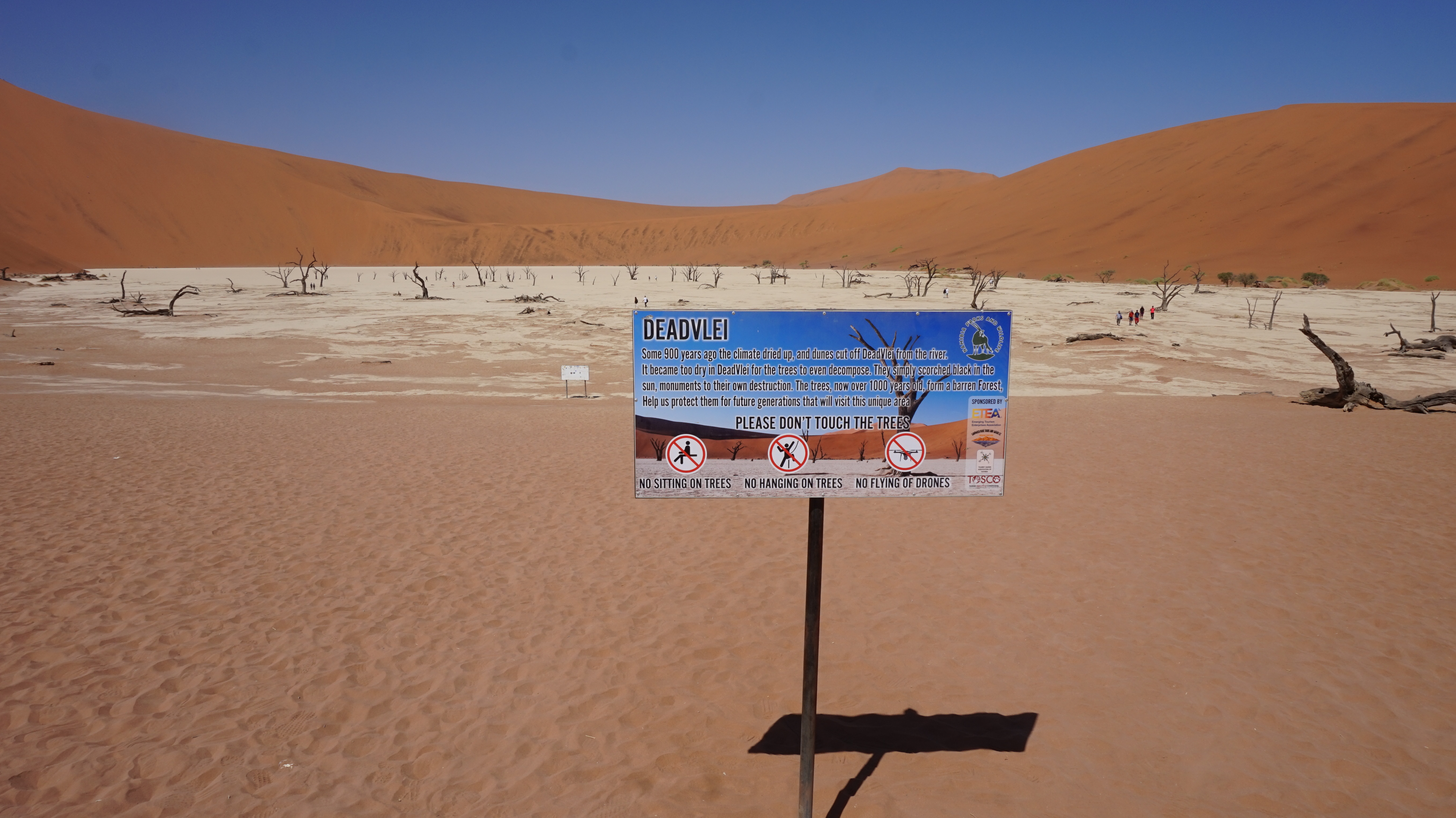
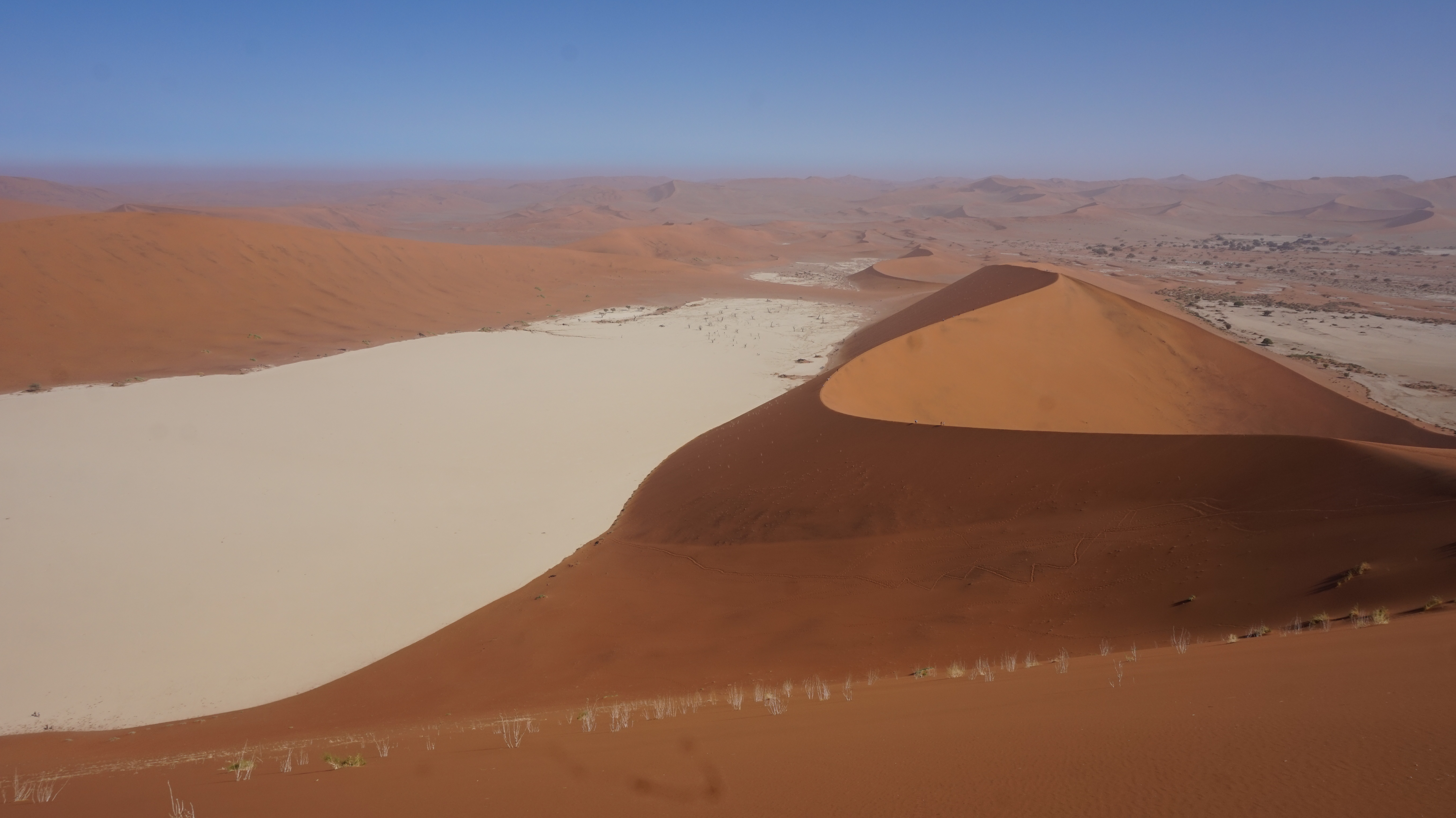
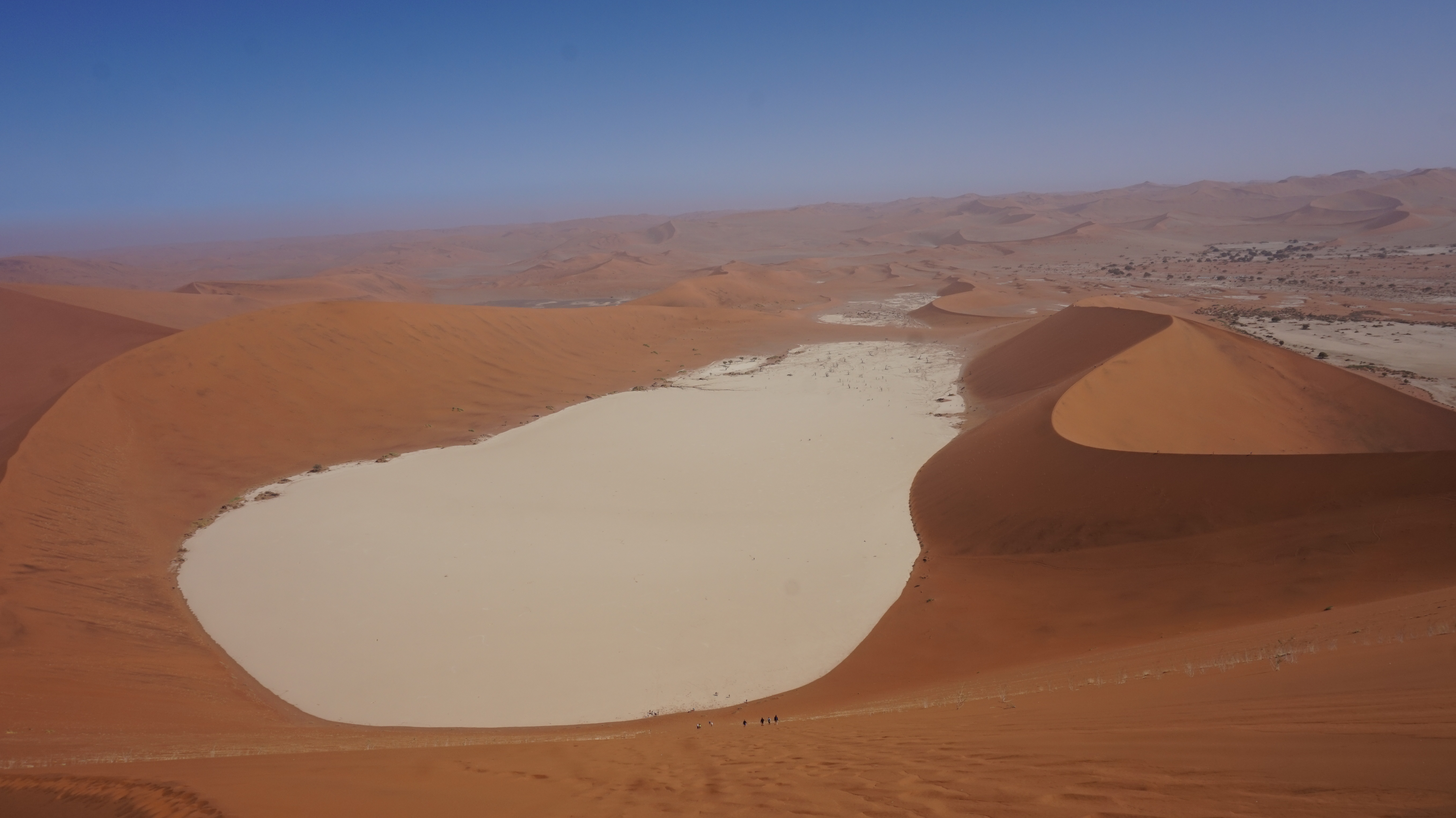
As dunas de Sossusvlei e a árvore-esqueleto de Deadvlei; o Parque Nacional de Etosha; a Costa dos Esqueletos; o cânion do rio Fish; Swakopmund entre o deserto e o Atlântico; as gravuras rupestres de Twyfelfontein.

Culture

Um dos países menos densamente povoados do mundo, com culturas vivas — ovambo, herero, himba, san, nama — e uma história marcada pelo domínio colonial alemão e sul-africano até à independência em 1990. O silêncio do deserto faz parte da identidade.

Gastronomie

Carnes grelhadas no braai, kapana comprada quente nos mercados, carne de caça como órix e kudu, e ostras frias da corrente de Benguela em Swakopmund e Walvis Bay. A cerveja segue a tradição alemã local.
Verde Wave · Livre Vivant

En savoir plus sur Namibia

Des chapitres construits à partir de recherches aux sources citées. Chaque bloc dit ce qu’il est et d’où il vient ; ce que nous ignorons encore est dit tout aussi clairement.

Étiquette et coutumes

Contexto e história

  • Ask permission before photographing people

    Ask permission before photographing people, especially in rural areas; some Himba communities expect a small donation.Ce bloc est encore en portugais ; la traduction est en cours.www.adventurehorizons.africa · vérifié 19 août 2026
  • Handshakes and respect gestures

    Handshakes are standard; holding your right elbow with your left hand shows extra respect, especially with elders.Ce bloc est encore en anglais ; la traduction est en cours.www.adventurehorizons.africa · vérifié 19 août 2026
  • Greet firstCorroborado por fontes independentes

    Greet first — before asking questions, entering shops, or approaching villages.Ce bloc est encore en anglais ; la traduction est en cours.thingstodoinnamibia.com · vérifié 19 août 2026
  • Avoid pointing with your index fingerCorroborado por fontes independentes

    Avoid pointing with your index finger; use your whole hand instead.Ce bloc est encore en anglais ; la traduction est en cours.thingstodoinnamibia.com · vérifié 19 août 2026
  • Bring a small gift if invited to someone's home

    Bring a small gift (sweets, tea, bread) if invited to someone's home.Ce bloc est encore en anglais ; la traduction est en cours.thingstodoinnamibia.com · vérifié 19 août 2026
  • Use your right hand for eating and passing food

    Use your right hand for eating and passing food.Ce bloc est encore en anglais ; la traduction est en cours.thingstodoinnamibia.com · vérifié 19 août 2026
Panorama

Contexto e história

  • Programa de Conservação

    O país também se orgulha de alguns sucessos exemplares de conservação com a reintrodução bem-sucedida do Rinoceronte Negro nas áreas comunais de Kunene e no Parque Nacional de Etosha e a reintrodução da Impala Cara Negra.Ce bloc est encore en portugais ; la traduction est en cours.www.meft.gov.na · vérifié 18 août 2026
  • Anexação do Reino Unido

    Em 1878, o Reino Unido anexou Walvis Bay em nome da Colónia do Cabo.Ce bloc est encore en portugais ; la traduction est en cours.www.meft.gov.na · vérifié 18 août 2026
  • Le secteur touristique en Namibie

    L'industrie touristique de la Namibie vous offre sans aucun doute un avantage comparatif, puisqu'une faible densité de population et une bonne gestion environnementale ont conduit à la préservation du paysage et à l'augmentation des populations de faune sauvage.mit.gov.na · vérifié 18 août 2026
  • Le secteur du tourisme

    Le secteur du tourisme est le secteur à la croissance la plus rapide en Namibie.mit.gov.na · vérifié 18 août 2026
  • Les frontières de la région d'Ohangwena

    Au nord, la région est délimitée par la région d'Ohangwena, à l'est elle partage une frontière commune avec la région d'Oshikoto, au sud, la région est limitée par la région de Kunene tandis que la région d'Omusati la limite à l'ouest.oshanarc.gov.na · vérifié 18 août 2026
  • Architecture et Traditions Allemandes

    L'annexion du pays par l'Allemagne en 1884 compte encore pour l'architecture et les traditions allemandes distinctives.www.meft.gov.na · vérifié 18 août 2026
  • Population de guépards

    La Namibie s'enorgueillit également d'avoir la population de guépards en liberté la plus élevée au monde.www.meft.gov.na · vérifié 18 août 2026
  • Marinheiros portugueses na Namíbia

    Os primeiros visitantes europeus foram marinheiros portugueses à procura de uma maneira de chegar às Índias no século 15.Ce bloc est encore en portugais ; la traduction est en cours.www.meft.gov.na · vérifié 18 août 2026
  • Rébellion Herero

    En 1904, le peuple Herero a lancé une rébellion.www.meft.gov.na · vérifié 18 août 2026
  • Les centres urbains du nord de la région

    La portion nord de la région, incluant les trois centres urbains d'Oshakati, Ongwediva et Ondangwa, est densément peuplée, à l'opposé de la partie centrale de la région qui est peu peuplée.oshanarc.gov.na · vérifié 18 août 2026
Lieux

Contexto e história

  • Parcs nationaux en Namibie

    La Namibie a mis en place un système impressionnant de parcs nationaux, gérés par l'État.www.meft.gov.na · vérifié 18 août 2026
  • Localisation de la région Oshana

    La région d'Oshana est située dans le centre-nord de la Namibie.oshanarc.gov.na · vérifié 18 août 2026
  • Sossusvlei and Dune 45 — sunrise on the world's tallest dunes

    Sossusvlei is a salt and clay pan inside Namib-Naukluft National Park, surrounded by some of the world's tallest and most photogenic sand dunes. Dune 45, exactly 45 km from the Sesriem gate, is the most visited: a 40–60 minute climb to a ridgeline that glows orange at sunrise. Nearby, Big Daddy (about 325 metres tall) looms over Deadvlei, a pan filled with skeletal acacia trees that died centuries ago when the river shifted. The best months are May to September, when daytime temperatures are comfortable and the light is crisp.Ce bloc est encore en anglais ; la traduction est en cours.coitraveler.com · vérifié 19 août 2026
  • Swakopmund — where German architecture meets the Namib Desert

    Swakopmund is Namibia's most "German" city, with a compact centre full of Wilhelminian-era buildings from the early 1900s: the Woermann House (1905), the Hohenzollern Building (1904–1906), and the Deutsche Evangelisch-Lutherische Church with its distinctive clock tower. The architecture creates a surreal contrast against the backdrop of the Namib Desert and the cold Atlantic Ocean. A self-guided walking tour of the heritage area takes about 90 minutes, starting at the railway station and ending at the waterfront.Ce bloc est encore en anglais ; la traduction est en cours.Emma Kelly · thewest.com.au · vérifié 19 août 2026
Saisons et fêtes

Contexto e história

  • Oshituthi shomagongo — the marula fruit festivalCorroborado por fontes independentes

    Between March and April, the eight Aawambo communities of northern Namibia gather for Oshituthi shomagongo, a two- to three-day celebration centred on omagongo, a fermented beverage made from marula fruit. Men carve wooden goblets and horn tools to pierce the fruit; women make clay pots and baskets, gather the ripened marulas, and ferment the juice for two to seven days. The festival is recognised by UNESCO as intangible cultural heritage and rotates annually among the Aawambo traditional authorities.Ce bloc est encore en anglais ; la traduction est en cours.ich.unesco.org · vérifié 19 août 2026
  • Seasonal rhythm — what changes when

    March–April: Oshituthi shomagongo (marula festival) in the north; harvest season, mild temperatures. May–October: Dry season; best for wildlife viewing in Etosha as animals gather at waterholes. November–February: Rainy season; the Etosha Pan can fill with shallow water, attracting flamingos; thunderstorms common. December–January: Christmas and New Year; many people return to rural areas; nature turns green.Ce bloc est encore en anglais ; la traduction est en cours.time.luft.co.jp · vérifié 19 août 2026
Patrimoine

Contexto e história

  • Twyfelfontein — the place among rocks

    Twyfelfontein, locally known as Ui-aes ("place among rocks"), is one of Africa's largest and most important concentrations of rock art, with an estimated 2,000–2,500 engravings and paintings spread across weathered red sandstone outcrops in the Kunene Region. Declared a UNESCO World Heritage Site in 2007, the site features depictions of animals, human figures, and mysterious symbols created over thousands of years by San hunter-gatherers and later Damara herders. Visitors walk among the boulders in Damaraland, tracing lines that tell stories of hunting, ritual, and daily life in a landscape that has changed little since the engravings were made.Ce bloc est encore en anglais ; la traduction est en cours.www.namibdune.com · vérifié 19 août 2026
  • Kolmanskop — the diamond ghost town

    In April 1908, a railway worker named Zacharias Lewala found a glimmering stone while clearing sand from tracks near Lüderitz. His German supervisor, August Stauch, recognised it as a diamond, sparking a rush that turned Kolmanskop into one of Africa's richest towns within a few years. By 1912, the town was producing over a million carats annually — nearly 12% of the world's total — with a hospital that had the southern hemisphere's first X-ray unit, a casino, and German-style villas. When richer deposits were found further south in 1928, people left; by 1956, Kolmanskop was abandoned, its buildings slowly filling with desert sand. (Em disputa: Some accounts dispute whether Lewala was entirely unrewarded; most agree he received no lasting benefit from the discovery.)Ce bloc est encore en anglais ; la traduction est en cours.www.bbc.com · vérifié 19 août 2026
Langue

Contexto e história

  • Language and greetings — how to say hello properlyCorroborado por fontes independentes

    Namibia has over a dozen languages; English is official, but Afrikaans, German, Oshiwambo, Damara/Nama (Khoekhoegowab), and Herero are widely spoken. Greetings matter: always greet before asking for directions or entering a shop. In Oshiwambo, Wa lalapo or Wa uhala po? ("How are you?") are common; in Khoekhoegowab, ǃGai ǁnâi ǀgâise! means "Good morning!" In Afrikaans, Hoe gaan dit? ("How's it going?") works everywhere. Using the right hand for eating and passing food is important, as the left is traditionally considered unclean.Ce bloc est encore en anglais ; la traduction est en cours.www.itinara.ai · vérifié 19 août 2026
Artisanat et achats locaux

Contexto e história

  • CraftsCorroborado por fontes independentes

    where to buy fairly: The Namibia Craft Centre in Windhoek (Old Breweries Complex, 40 Tal Street) hosts over 50 stalls run by rural artisans, women's groups, and creative entrepreneurs selling jewellery, baskets, wood carvings, textiles, and more. It's a reliable place to buy directly from makers and support local communities.Ce bloc est encore en anglais ; la traduction est en cours.www.namibiacraftcentre.com · vérifié 19 août 2026
Gastronomie

Contexto e história

  • Kapana — the street barbecue that defines Windhoek eveningsCorroborado por fontes independentes

    In the Katutura and Single Quarters markets of Windhoek, kapana is Namibia's most iconic street food: thin strips of beef grilled over open coals on repurposed oil drums, slapped with chilli-lime sauce and served hot with a tomato-onion salsa. You eat it standing, fingers burning slightly, dipping each piece into kapana spice and salt while the meat hisses in the desert air.Ce bloc est encore en anglais ; la traduction est en cours.thingstodoinnamibia.com · vérifié 19 août 2026
  • Oshifima and potjiekos — how meals are sharedCorroborado por fontes independentes

    Oshifima is a stiff porridge made from mahangu (pearl millet), the everyday staple of northern Namibia's Ovambo communities. It's eaten by hand: you pinch off a small ball with your right hand and use it to scoop up meat stews, dried fish, or wild spinach. Potjiekos, by contrast, is a slow-cooked stew made in a three-legged cast-iron pot over coals, layered with meat and vegetables and left unstirred so each ingredient keeps its flavour. It's a social dish, often cooked outdoors at lodges and gatherings.Ce bloc est encore en anglais ; la traduction est en cours.thingstodoinnamibia.com · vérifié 19 août 2026
Culture

Contexto e história

  • Himba and otjize — beauty, identity, and daily ritual

    The Himba of northern Namibia are semi-nomadic herders known for their distinctive use of otjize, a paste of butterfat and red ochre applied daily to skin and hair. For Himba women, otjize is not just protection from the sun or insects; it is a matter of beauty and cultural identity, applied each morning as a ritual that connects them to the earth's red colour and to blood as the essence of life. Hairstyles signal age and status: young girls wear two forward-facing braids, adolescents cover their faces with multiple braids, and married women wear elaborate otjize-covered dreads with an erembe headdress. (Em disputa: The practical benefits of otjize (sun protection, insect repellent) are debated; Himba themselves emphasise beauty and tradition over utility.)Ce bloc est encore en anglais ; la traduction est en cours.www.cnn.com · vérifié 19 août 2026

Sources de ce chapitre: www.adventurehorizons.africa · thingstodoinnamibia.com · mit.gov.na · oshanarc.gov.na · www.meft.gov.na · coitraveler.com · thewest.com.au · ich.unesco.org · time.luft.co.jp · www.namibdune.com · www.bbc.com · www.itinara.ai · www.namibiacraftcentre.com · www.cnn.com

Notes de Terrain

Vu en Namibia

De vraies photographies des archives Verde Wave : lieu et date, par quelqu’un qui y était.

Namibia
Sossuvlei · © André Gomes
Namibia
Sossuvlei
Namibia
Sossuvlei

Por onde começar

Os lugares que o livro de Namibia conhece

Derivado automaticamente do conteúdo verificado do livro: cada cartão é um lugar que o livro cita, com os temas que o sustentam. Sem verificação de zona no terreno, e nunca um veredicto de segurança.

Parques nacionais na Namíbia

Lugares

1 entrada no livro, com fontes

Twyfelfontein

Património

1 entrada no livro, com fontes

Kolmanskop

Património

1 entrada no livro, com fontes

Localização da região Oshana

Lugares

1 entrada no livro, com fontes

Sossusvlei and Dune 45

Lugares

1 entrada no livro, com fontes

Swakopmund

Lugares

1 entrada no livro, com fontes

Como ler isto: estes lugares vêm apenas do que o livro já publica com fontes. A lista cresce com o livro, não com palpites, e nenhuma zona recebe nota de segurança.