Verde Wave Beta

Dunes meeting the sea, desert silence and skies that do not end.

The essentials for arriving prepared: entry documents, health, internet, money and arrival.

Explore NamibiaDocuments and entry

Destination guide

Last updated: August 21, 2026

The rule most guides have not caught up with: since 1 April 2025, Portuguese citizens need a visa for Namibia. The top of this page is verified against two independent national authorities, and the Namibian ministry portal we could not read is named as such. Anything not yet verified shows as "to confirm", never as a guess.

Travel essentials

THIS HAS CHANGED. Since 1 April 2025 Portuguese citizens no longer enter Namibia visa-free. If you travelled before that, or remember it being exempt, the rule in your head is wrong. Verified on 21 August 2026 against the Namibian Embassy and the Portuguese consular portal.

PassportEntry rule
Portugal and most of the EUVisa REQUIRED since 1 April 2025. Obtained on arrival or online through the Home Affairs ministry portal. The Namibian Embassy states N$1,600 (about EUR 85)
Angola · Brazil · Mozambique · Mauritius · South AfricaEXEMPT. They hold visa-exemption agreements with Namibia — unlike Portugal. If you travel as a family on different passports, do not assume everyone pays the same
📘 The passport must be electronicThe Portuguese consular portal requires an electronic Portuguese passport, valid at least 6 months from the date of RETURN from Namibia, with 3 free pages for stamps

⚠️ Border rules change without notice. Always confirm with the official source (consulate, immigration, travel.state.gov, gov.uk, Portal das Comunidades) before travelling.

Health

A yellow fever vaccination certificate is required only for travellers arriving from a country with risk — not for those flying directly from Europe. The Portuguese consular portal rates the health situation as broadly satisfactory. See a travel medicine clinic before booking: malaria occurs in the north in the rainy season, and that is a clinical conversation, not a border rule.

Passport

At least 6 months validity from the date of RETURN — not the date of entry, which is stricter than it sounds. It must be an electronic passport and you need 3 free pages. Check the pages before you go: a full passport is refused at the border as fast as an expired one.

To confirm (not published as fact):

  • The official Namibian e-services portal (eservices.mhaiss.gov.na) does not answer us: it returns a 468 error and a certificate chain that does not validate. We published the visa fee and conditions from the Namibian Embassy and the Portuguese consular portal, which agree with each other — but we could not read the ministry’s own portal. Confirm the amount and the process there before paying.
  • Cabo Verdean, Bissau-Guinean, Ghanaian and Nigerian passports: they appear on neither the exemption list nor the visa-on-arrival list we were able to read. Assume neither — confirm before buying a ticket.
  • The rainy season in the north and what changes about driving gravel roads in those months: to confirm before publishing operational advice.

Arrival & Safety

Airport

Hosea Kutako International Airport (code WDH), around 45 km from Windhoek — this is not a city-edge airport, and the drive into town belongs in your planning. Around an hour from landing to leaving with your bags is realistic.

Getting in

Namibia drives on the left. Most visitors hire a car, and off the main roads the surface is gravel: that is where the driving gets demanding, and it is why the Portuguese official advisory puts road accidents as the single biggest risk to a tourist. Distances are vast — plan in driving hours, not kilometres.

Safety

The biggest risk is the road, not crime

The Portuguese consular portal (updated 25 November 2025) is unusually direct: road accidents are the biggest risk to a tourist in Namibia, and fast access to medical care is essential. It adds that thefts and robberies have risen significantly in recent months. We do not issue safety verdicts: this is the official advisory and the date it was written. Read the two sentences in the order they were written — the first is the one that kills tourists.

⚠️ Border rules change without notice. Always confirm with the official source (consulate, immigration, travel.state.gov, gov.uk, Portal das Comunidades) before travelling.

Money

The Namibian dollar (NAD) is pegged 1:1 to the South African rand, and the rand circulates freely in Namibia as payment. The reverse is not true: the Namibian dollar is not accepted in South Africa, so do not leave the country with NAD notes expecting to spend them in Johannesburg.

Connectivity

MTC is the largest mobile operator in the country and has run since 1994; Telecom Namibia is the other name you will see. Coverage is good in the cities.

SIM registration against an identity document is required in Namibia — take your passport with you to buy a SIM, not just a card. You cannot pick up an anonymous SIM at a kiosk as in many countries.

Outside cities coverage is patchy; prepare offline maps.
Practical tips

Best time

Desert and semi-desert climate: hot days, nights that cool fast, and a cooler dry season mid-year that is good for wildlife. Check the climate of the specific region you plan to visit.

Languages

English is the official language; Oshiwambo, Afrikaans, Otjiherero and other national languages are widely heard, and German heritage is visible in towns like Swakopmund. Portuguese is rare outside Angola-linked communities.

Etiquette

Calm, direct greetings, respect for elders and patience with long distances: journeys between sights are measured in hours. The rest of the practical guide is in preparation.

What to see & culture

Places

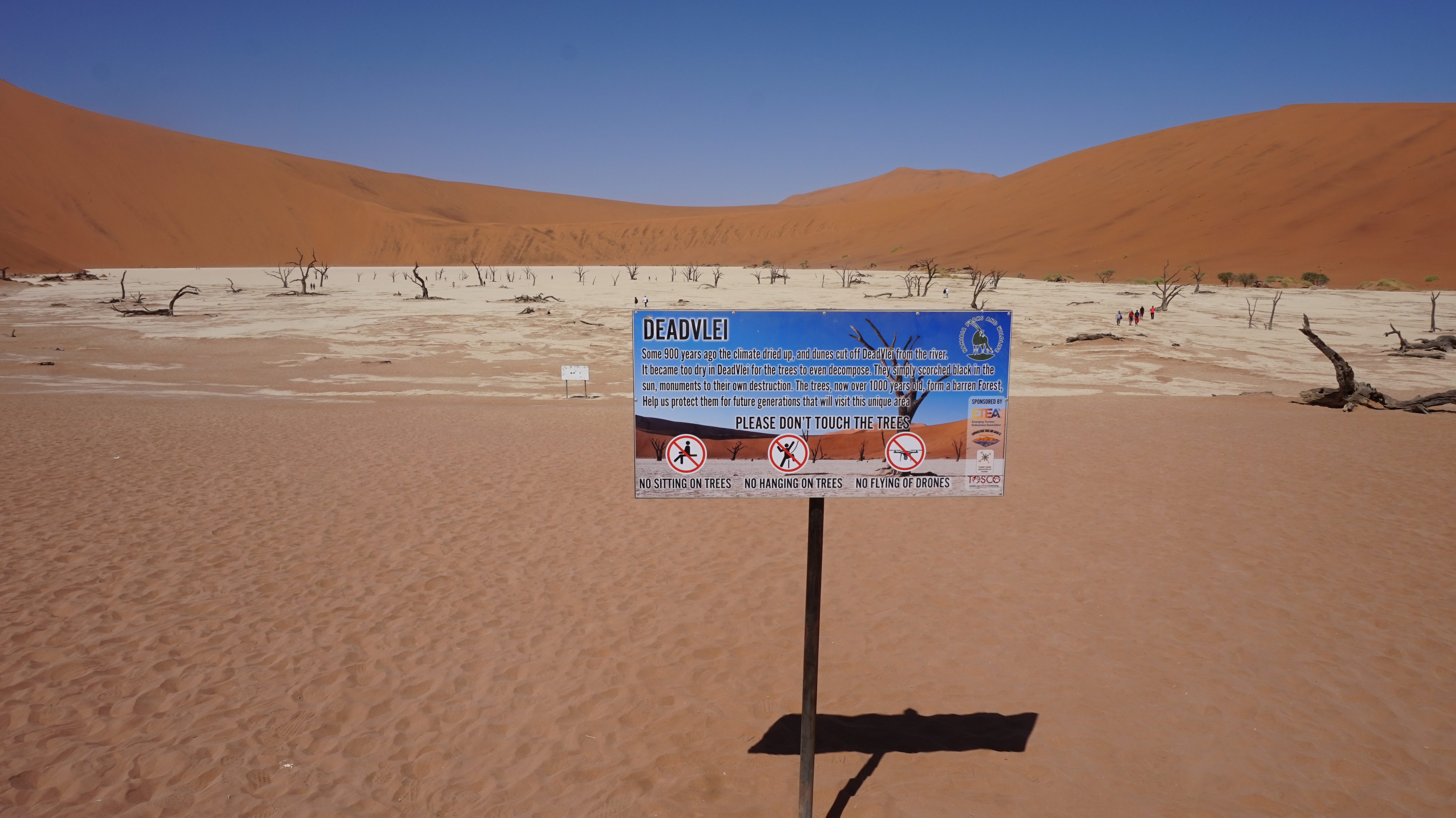
The dunes of Sossusvlei and the skeleton trees of Deadvlei; Etosha National Park; the Skeleton Coast; the Fish River Canyon; Swakopmund between desert and Atlantic; the rock engravings of Twyfelfontein.

Culture

One of the least densely populated countries on earth, with living cultures — Ovambo, Herero, Himba, San, Nama — and a history marked by German and South African rule until independence in 1990. The desert's silence is part of the identity.

Food

Grilled meats at the braai, kapana bought hot at the markets, game such as oryx and kudu, and cold-current oysters in Swakopmund and Walvis Bay. The beer follows the local German tradition.

Verde Wave · Living Book

More about Namibia

Chapters built from research with cited sources. Each block says what it is and where it came from; what we do not yet know is stated just as plainly.

Etiquette and customs

Contexto e história

  • Ask permission before photographing people

    Ask permission before photographing people, especially in rural areas; some Himba communities expect a small donation.This block is still in Portuguese; translation is under way.www.adventurehorizons.africa · checked 19 Aug 2026
  • Handshakes and respect gestures

    Handshakes are standard; holding your right elbow with your left hand shows extra respect, especially with elders.www.adventurehorizons.africa · checked 19 Aug 2026
  • Greet firstCorroborado por fontes independentes

    Greet first — before asking questions, entering shops, or approaching villages.thingstodoinnamibia.com · checked 19 Aug 2026
  • Avoid pointing with your index fingerCorroborado por fontes independentes

    Avoid pointing with your index finger; use your whole hand instead.thingstodoinnamibia.com · checked 19 Aug 2026
  • Bring a small gift if invited to someone's home

    Bring a small gift (sweets, tea, bread) if invited to someone's home.thingstodoinnamibia.com · checked 19 Aug 2026
  • Use your right hand for eating and passing food

    Use your right hand for eating and passing food.thingstodoinnamibia.com · checked 19 Aug 2026
Overview

Contexto e história

  • Programa de Conservação

    O país também se orgulha de alguns sucessos exemplares de conservação com a reintrodução bem-sucedida do Rinoceronte Negro nas áreas comunais de Kunene e no Parque Nacional de Etosha e a reintrodução da Impala Cara Negra.This block is still in Portuguese; translation is under way.www.meft.gov.na · checked 18 Aug 2026
  • Anexação do Reino Unido

    Em 1878, o Reino Unido anexou Walvis Bay em nome da Colónia do Cabo.This block is still in Portuguese; translation is under way.www.meft.gov.na · checked 18 Aug 2026
  • The tourism sector in Namibia

    Namibia's tourism industry undoubtedly offers you a comparative advantage, since a low population density and good environmental management have led to the preservation of the landscape and the increase of wildlife populations.mit.gov.na · checked 18 Aug 2026
  • Title

    The Tourism Sector Body: The tourism sector is the fastest-growing sector in Namibia.mit.gov.na · checked 18 Aug 2026
  • The Ohangwena region's borders

    To the north, the region is bordered by the Ohangwena region, to the east it shares a common border with the Oshikoto region, to the south, the region borders the Kunene region while the Omusati region borders it to the west.oshanarc.gov.na · checked 18 Aug 2026
  • Title

    German Architecture and Traditions Body: The country's annexation by Germany in 1884 still accounts for the distinctive German architecture and traditions.www.meft.gov.na · checked 18 Aug 2026
  • Cheetah population

    Namibia also prides itself on having the highest population of free-ranging cheetahs in the entire world.www.meft.gov.na · checked 18 Aug 2026
  • Marinheiros portugueses na Namíbia

    Os primeiros visitantes europeus foram marinheiros portugueses à procura de uma maneira de chegar às Índias no século 15.This block is still in Portuguese; translation is under way.www.meft.gov.na · checked 18 Aug 2026
  • Herero Rebellion

    In 1904, the Herero people launched a rebellion.www.meft.gov.na · checked 18 Aug 2026
  • Title

    The tourism sector is a valuable industry Body: The sector has proven to be a valuable industry for Namibia, making considerable direct and indirect contributions to GDP, as well as acting as a substantial employer, especially in rural areas, thus reducing rural poverty.mit.gov.na · checked 18 Aug 2026
  • Urban centres in the north of the region

    The northern part of the region, including the three urban centres of Oshakati, Ongwediva and Ondangwa, is densely populated, in contrast to the central part of the region, which is sparsely populated.oshanarc.gov.na · checked 18 Aug 2026
Places

Contexto e história

  • National parks in Namibia

    Namibia has established an impressive system of state-managed national parks.www.meft.gov.na · checked 18 Aug 2026
  • Location of the Oshana Region

    The Oshana Region is located in north-central Namibia.oshanarc.gov.na · checked 18 Aug 2026
  • Sossusvlei and Dune 45 — sunrise on the world's tallest dunes

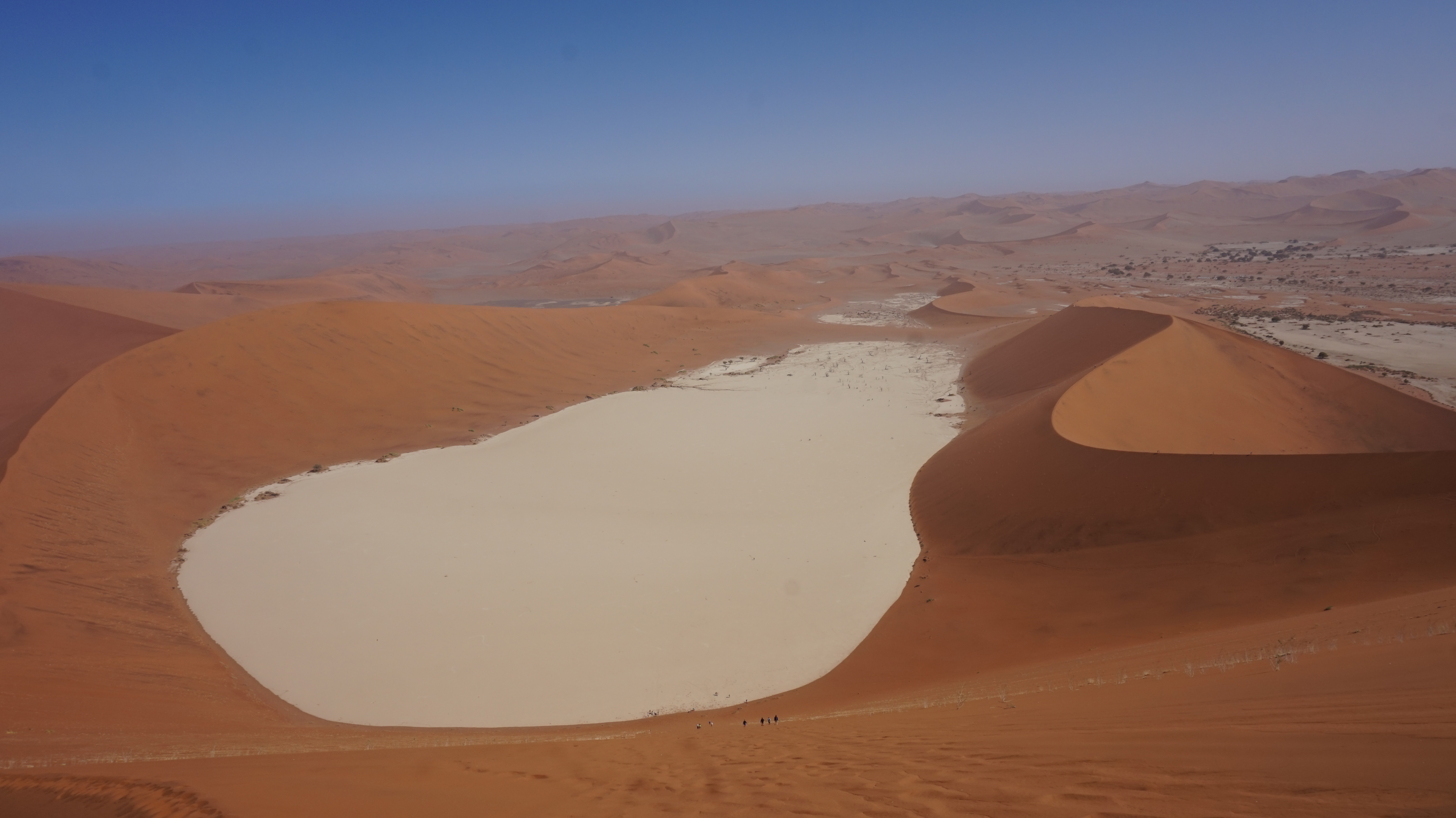
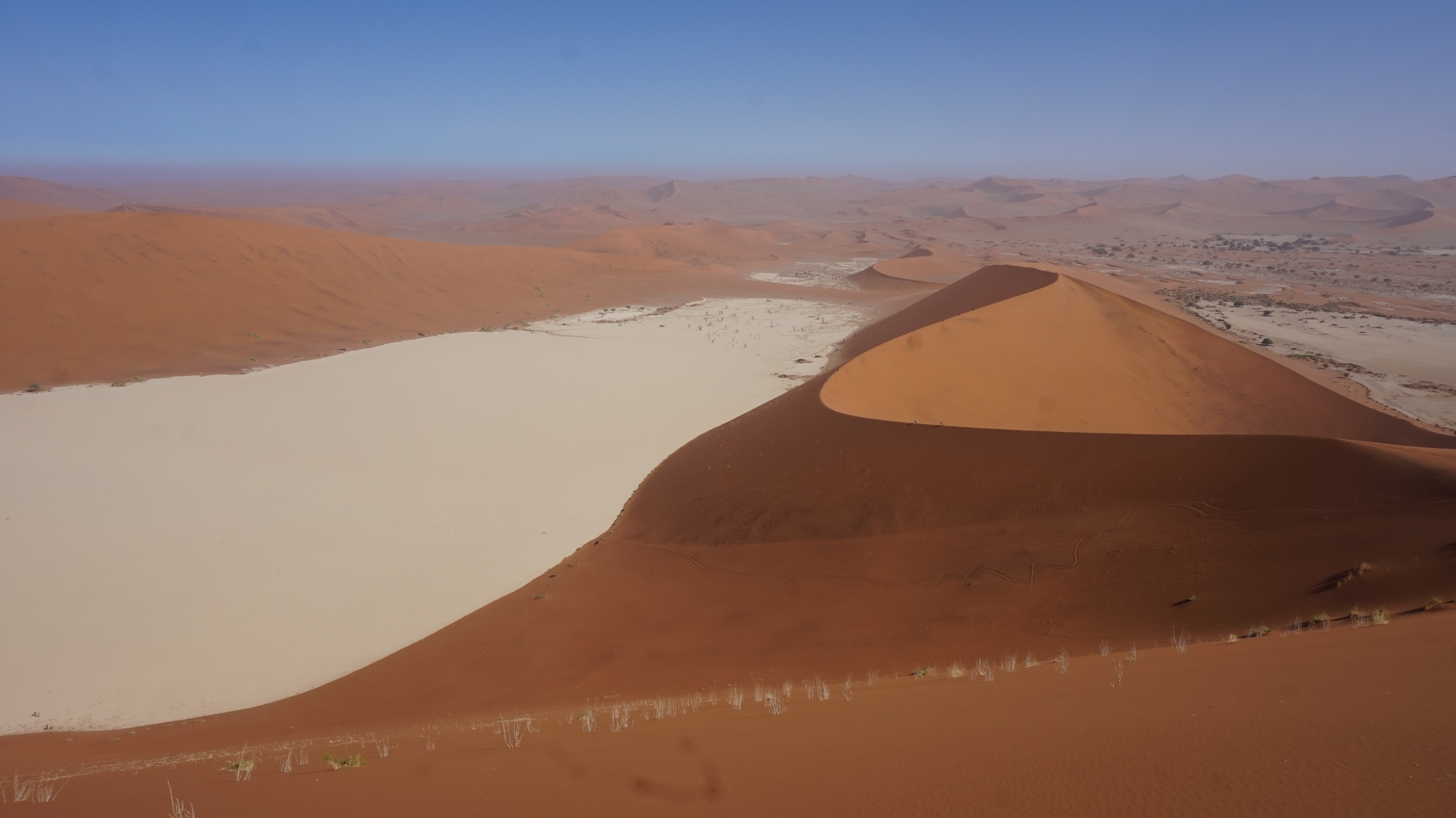
    Sossusvlei is a salt and clay pan inside Namib-Naukluft National Park, surrounded by some of the world's tallest and most photogenic sand dunes. Dune 45, exactly 45 km from the Sesriem gate, is the most visited: a 40–60 minute climb to a ridgeline that glows orange at sunrise. Nearby, Big Daddy (about 325 metres tall) looms over Deadvlei, a pan filled with skeletal acacia trees that died centuries ago when the river shifted. The best months are May to September, when daytime temperatures are comfortable and the light is crisp.coitraveler.com · checked 19 Aug 2026
  • Swakopmund — where German architecture meets the Namib Desert

    Swakopmund is Namibia's most "German" city, with a compact centre full of Wilhelminian-era buildings from the early 1900s: the Woermann House (1905), the Hohenzollern Building (1904–1906), and the Deutsche Evangelisch-Lutherische Church with its distinctive clock tower. The architecture creates a surreal contrast against the backdrop of the Namib Desert and the cold Atlantic Ocean. A self-guided walking tour of the heritage area takes about 90 minutes, starting at the railway station and ending at the waterfront.Emma Kelly · thewest.com.au · checked 19 Aug 2026
Seasons and festivals

Contexto e história

  • Oshituthi shomagongo — the marula fruit festivalCorroborado por fontes independentes

    Between March and April, the eight Aawambo communities of northern Namibia gather for Oshituthi shomagongo, a two- to three-day celebration centred on omagongo, a fermented beverage made from marula fruit. Men carve wooden goblets and horn tools to pierce the fruit; women make clay pots and baskets, gather the ripened marulas, and ferment the juice for two to seven days. The festival is recognised by UNESCO as intangible cultural heritage and rotates annually among the Aawambo traditional authorities.ich.unesco.org · checked 19 Aug 2026
  • Seasonal rhythm — what changes when

    March–April: Oshituthi shomagongo (marula festival) in the north; harvest season, mild temperatures. May–October: Dry season; best for wildlife viewing in Etosha as animals gather at waterholes. November–February: Rainy season; the Etosha Pan can fill with shallow water, attracting flamingos; thunderstorms common. December–January: Christmas and New Year; many people return to rural areas; nature turns green.time.luft.co.jp · checked 19 Aug 2026
Heritage

Contexto e história

  • Twyfelfontein — the place among rocks

    Twyfelfontein, locally known as Ui-aes ("place among rocks"), is one of Africa's largest and most important concentrations of rock art, with an estimated 2,000–2,500 engravings and paintings spread across weathered red sandstone outcrops in the Kunene Region. Declared a UNESCO World Heritage Site in 2007, the site features depictions of animals, human figures, and mysterious symbols created over thousands of years by San hunter-gatherers and later Damara herders. Visitors walk among the boulders in Damaraland, tracing lines that tell stories of hunting, ritual, and daily life in a landscape that has changed little since the engravings were made.www.namibdune.com · checked 19 Aug 2026
  • Kolmanskop — the diamond ghost town

    In April 1908, a railway worker named Zacharias Lewala found a glimmering stone while clearing sand from tracks near Lüderitz. His German supervisor, August Stauch, recognised it as a diamond, sparking a rush that turned Kolmanskop into one of Africa's richest towns within a few years. By 1912, the town was producing over a million carats annually — nearly 12% of the world's total — with a hospital that had the southern hemisphere's first X-ray unit, a casino, and German-style villas. When richer deposits were found further south in 1928, people left; by 1956, Kolmanskop was abandoned, its buildings slowly filling with desert sand. (Em disputa: Some accounts dispute whether Lewala was entirely unrewarded; most agree he received no lasting benefit from the discovery.)www.bbc.com · checked 19 Aug 2026
Language

Contexto e história

  • Language and greetings — how to say hello properlyCorroborado por fontes independentes

    Namibia has over a dozen languages; English is official, but Afrikaans, German, Oshiwambo, Damara/Nama (Khoekhoegowab), and Herero are widely spoken. Greetings matter: always greet before asking for directions or entering a shop. In Oshiwambo, Wa lalapo or Wa uhala po? ("How are you?") are common; in Khoekhoegowab, ǃGai ǁnâi ǀgâise! means "Good morning!" In Afrikaans, Hoe gaan dit? ("How's it going?") works everywhere. Using the right hand for eating and passing food is important, as the left is traditionally considered unclean.www.itinara.ai · checked 19 Aug 2026
Crafts and local shopping

Contexto e história

  • CraftsCorroborado por fontes independentes

    where to buy fairly: The Namibia Craft Centre in Windhoek (Old Breweries Complex, 40 Tal Street) hosts over 50 stalls run by rural artisans, women's groups, and creative entrepreneurs selling jewellery, baskets, wood carvings, textiles, and more. It's a reliable place to buy directly from makers and support local communities.www.namibiacraftcentre.com · checked 19 Aug 2026
Food and drink

Contexto e história

  • Kapana — the street barbecue that defines Windhoek eveningsCorroborado por fontes independentes

    In the Katutura and Single Quarters markets of Windhoek, kapana is Namibia's most iconic street food: thin strips of beef grilled over open coals on repurposed oil drums, slapped with chilli-lime sauce and served hot with a tomato-onion salsa. You eat it standing, fingers burning slightly, dipping each piece into kapana spice and salt while the meat hisses in the desert air.thingstodoinnamibia.com · checked 19 Aug 2026
  • Oshifima and potjiekos — how meals are sharedCorroborado por fontes independentes

    Oshifima is a stiff porridge made from mahangu (pearl millet), the everyday staple of northern Namibia's Ovambo communities. It's eaten by hand: you pinch off a small ball with your right hand and use it to scoop up meat stews, dried fish, or wild spinach. Potjiekos, by contrast, is a slow-cooked stew made in a three-legged cast-iron pot over coals, layered with meat and vegetables and left unstirred so each ingredient keeps its flavour. It's a social dish, often cooked outdoors at lodges and gatherings.thingstodoinnamibia.com · checked 19 Aug 2026
Culture

Contexto e história

  • Himba and otjize — beauty, identity, and daily ritual

    The Himba of northern Namibia are semi-nomadic herders known for their distinctive use of otjize, a paste of butterfat and red ochre applied daily to skin and hair. For Himba women, otjize is not just protection from the sun or insects; it is a matter of beauty and cultural identity, applied each morning as a ritual that connects them to the earth's red colour and to blood as the essence of life. Hairstyles signal age and status: young girls wear two forward-facing braids, adolescents cover their faces with multiple braids, and married women wear elaborate otjize-covered dreads with an erembe headdress. (Em disputa: The practical benefits of otjize (sun protection, insect repellent) are debated; Himba themselves emphasise beauty and tradition over utility.)www.cnn.com · checked 19 Aug 2026

Sources for this chapter: www.adventurehorizons.africa · thingstodoinnamibia.com · mit.gov.na · oshanarc.gov.na · www.meft.gov.na · coitraveler.com · thewest.com.au · ich.unesco.org · time.luft.co.jp · www.namibdune.com · www.bbc.com · www.itinara.ai · www.namibiacraftcentre.com · www.cnn.com

Field Notes

Seen in Namibia

Real photographs from the Verde Wave archive: place and date, from someone who was there.

Namibia
Sossuvlei · © André Gomes
Namibia
Sossuvlei
Namibia
Sossuvlei

Por onde começar

Os lugares que o livro de Namibia conhece

Derivado automaticamente do conteúdo verificado do livro: cada cartão é um lugar que o livro cita, com os temas que o sustentam. Sem verificação de zona no terreno, e nunca um veredicto de segurança.

Parques nacionais na Namíbia

Lugares

1 entrada no livro, com fontes

Twyfelfontein

Património

1 entrada no livro, com fontes

Kolmanskop

Património

1 entrada no livro, com fontes

Localização da região Oshana

Lugares

1 entrada no livro, com fontes

Sossusvlei and Dune 45

Lugares

1 entrada no livro, com fontes

Swakopmund

Lugares

1 entrada no livro, com fontes

Como ler isto: estes lugares vêm apenas do que o livro já publica com fontes. A lista cresce com o livro, não com palpites, e nenhuma zona recebe nota de segurança.

Roteiro

Quantos dias tens em Namibia?

Montamos uma ordem de dias apenas com o que o livro já verificou, pesada pelo que os viajantes andam a perguntar. Uma sugestão com as contas à vista, nunca um roteiro inventado.

🔥 Campfire · Namibia

The fire is quiet.

When a topic gathers enough people, a 20-minute hosted conversation gets scheduled: no recording, no attendee list, and never about visas. That is what the book is for.

What conversation would make you show up?

Fire rules: short scheduled conversations, never empty open rooms. No recording by default. We count presence, we never show lists. Visa and health questions go to the book, with sources, not to a room.

Sources we consulted

Corroborating sources

References consulted in this guide

  1. Embaixada da Namíbia (Berlim) — países com acordo de isenção de visto e regime de visto à chegada
  2. Portal das Comunidades Portuguesas — Namíbia, atualizado 25/11/2025
  3. Ministério do Interior, Imigração, Segurança e Proteção da Namíbia — portal de e-serviços (visto à chegada)

This guide is growing

New chapters are added as research is verified. Leave your email and we will tell you when a new chapter lands.