QR delivered by email in under 3 minutes. Install before you travel, activate when you land.
Destination guide
Last updated: June 15, 2026The bridge between Europe and Africa — medinas, desert, the Atlas mountains and mint tea. Easy to reach and generally safe, with the usual tourist cautions. Here is the essential, verified.
Travel essentials
European citizens enter visa-free for up to 90 days for tourism. For African passports the rule varies: Senegal and Guinea-Bissau are exempt; Ghana enters visa-free with an electronic authorization on the “Accès Maroc” portal; Angola, Nigeria and Cabo Verde generally need a visa/eVisa. No yellow fever requirement.
| Passport | Entry rule | Max stay |
|---|
| Portugal · Spain · France · United Kingdom | Visa-free (tourism) | 90 days |
| Senegal · Guinea-Bissau | Visa-free (tourism) | 90 days |
| Ghana | Visa-free with e-authorization (“Accès Maroc” portal) | — |
| Angola · Nigeria · Cabo Verde | Visa / eVisa required — check on “Accès Maroc” | — |
⚠️ Border rules change without notice. Always confirm with the official source (consulate, immigration, travel.state.gov, gov.uk, Portal das Comunidades) before travelling.
Health
No mandatory vaccine for direct arrivals from Europe, including yellow fever. Keep routine vaccinations up to date.
Passport
Passport valid for at least 6 months beyond the date of arrival, plus proof of onward travel and accommodation.
To confirm (not published as fact):
- Exemption and eVisa lists change — confirm each African passport’s eligibility on the official “Accès Maroc” portal at the time of travel.
Arrival & Safety
Airport
The most common gateways from Europe: Casablanca (Mohammed V, CMN), Marrakech (Menara, RAK), Rabat-Salé, Fes-Saïss and Agadir.
Getting in
The backbone is licensed taxis: “petits taxis” (city) and “grands taxis” (between cities) — agree the fare or ask for the meter. Ride apps (Careem, inDrive, Bolt, Heetch; Uber returned in late 2025) operate in the big cities, but some in a legal gray area. Avoid unofficial “guides” and informal exchange houses.
Safety
Level 2 — Exercise Increased Caution (US)Most trips are trouble-free (Level 2, US, for terrorism risk). The main concern is skilled petty theft and scams in the labyrinthine medinas and tourist areas — keep valuables discreet, avoid demonstrations and take extra care at night in quiet areas.
⚠️ Border rules change without notice. Always confirm with the official source (consulate, immigration, travel.state.gov, gov.uk, Portal das Comunidades) before travelling.
Money
Currency: Moroccan dirham (MAD). It is a “closed” currency — importing or exporting dirhams is prohibited, so exchange on arrival and spend what you have before leaving. Cards work in hotels and restaurants; in the souks, cash is king.
Connectivity
Three operators: Maroc Telecom (coverage leader, especially in the Atlas and desert), Orange (fast in cities — Casablanca, Rabat, Marrakech) and Inwi (cheaper). 4G covers over 99% of populated areas and 5G is growing in the big cities.
An eSIM gives you data the moment you land, ideal for leaving the airport and ordering transport stress-free, and for itineraries hopping between cities without registering a SIM at each stop.
WhatsApp works normally: the old VoIP-call ban was lifted in 2016. Messaging and navigation work well; call quality can vary by network and time of day.
See eSIM plans →Sending money Morocco
Sending money to Morocco is part of diaspora life. The usual options: bank transfer (slower and sometimes with hidden FX margins), specialist apps like Wise, Remitly and WorldRemit (fast and transparent on fees), and cash pickup via Western Union or MoneyGram. In Morocco, cash pickup (Western Union, Cash Plus) is very common, alongside bank transfer in dirhams (MAD). Always compare the total cost — fee plus exchange-rate margin — and the speed before sending. Verde Wave never handles money; we just point you to the tools.
Practical tips
Best time
Spring (March–May) and autumn (September–November) are ideal for Marrakech, Fes and Chefchaouen, avoiding the extreme summer heat of the interior and desert.
Languages
Arabic (Darija, the Moroccan dialect) and Amazigh (Berber) are the official languages. French is the language of commerce, diplomacy and tourism; Spanish is common in the north and English is growing in tourist areas.
Etiquette
Morocco is a conservative Muslim country: modest dress (shoulders and legs covered) is appreciated away from tourist areas. Friday is the holy day and can shift shop and monument hours. Haggling in the souks is part of the culture — keep a friendly, good-humoured tone.
What to see & culture
Places
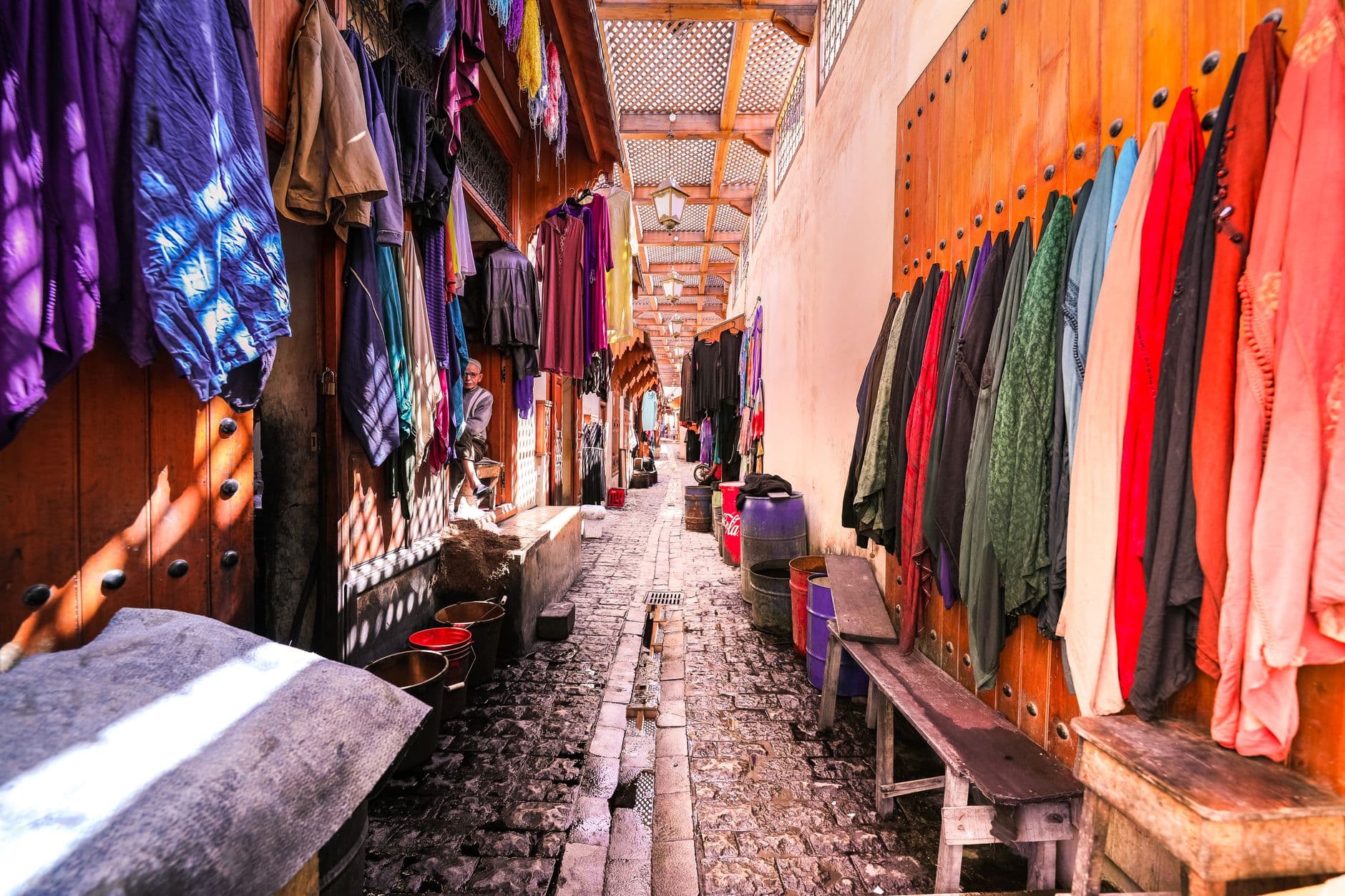
Marrakech (Jemaa el-Fna square, the souks, the Majorelle Garden), Fes (the medina and tanneries), Chefchaouen (the blue city), the Hassan II Mosque in Casablanca and the Merzouga desert with the dunes of Erg Chebbi.
Culture
Morocco is a synthesis of Moorish architecture, zellige tilework and Amazigh (Berber) traditions. Gnawa and chaabi music are timeless references, alongside the crafts — ceramics, leather and rugs.
Food
The tagine (a slow-cooked stew), couscous (traditionally on Fridays), pastilla, harira and the ever-present sweet mint tea. Street food — sandwiches and brochettes — is an essential part of the experience.
Sources
- US State Department — Morocco Travel Advisory (Nível 2)
- UK FCDO — Morocco foreign travel advice
- Accès Maroc — autorização eletrónica / eVisa (portal oficial)
- Portal das Comunidades (MNE Portugal) — Marrocos